Coffee grinders
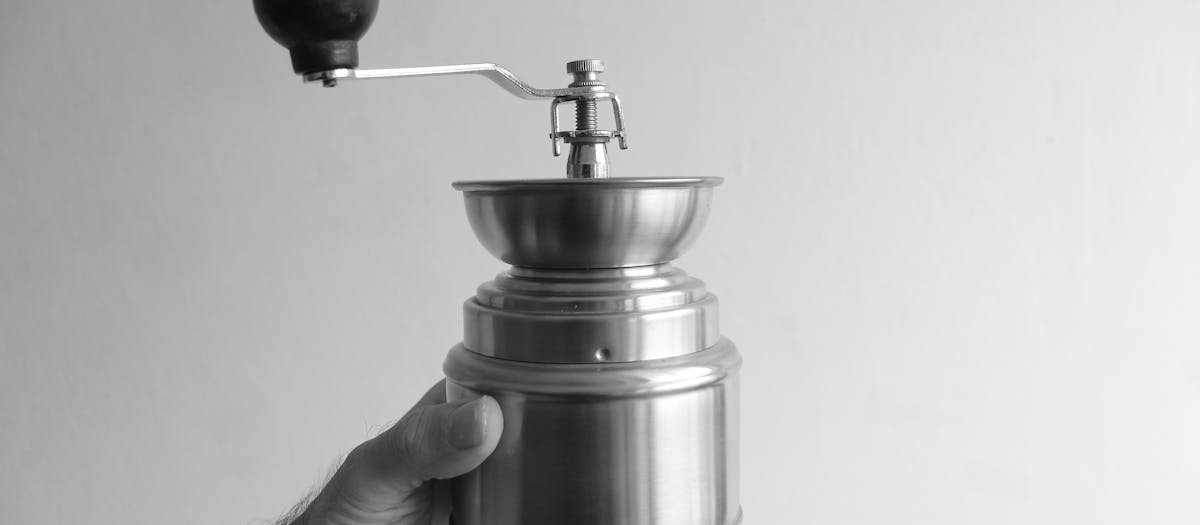
The grinder is the upgrade that changes the cup most. Coffee starts going stale within minutes of grinding, and an even grind is what lets water extract flavour evenly — which is the whole game in pour-over. This silo explains the two things that decide a grinder (burr type and grind consistency), the hand-versus-electric choice, and the price tiers, then points you to the tiered buyer's guide.
Why the grinder matters more than the brewer
Pour-over works by dissolving flavour out of the grounds at an even rate. If the grounds are all different sizes — as they are from a cheap blade chopper — the small particles over-extract and taste bitter while the large ones under-extract and taste sour, in the same cup. A consistent grind removes that problem. That is why a basic brewer fed evenly-ground coffee beats a premium brewer fed uneven grounds, and why I tell beginners to spend here first.
Burr versus blade
A blade grinder is a spinning blade that chops beans into random sizes — avoid it for pour-over. A burr grinder crushes beans between two abrasive surfaces (the burrs) set a fixed distance apart, so every particle comes out close to the same size. The gap is adjustable, which is how you set grind size. Every grinder worth buying for pour-over uses burrs. The remaining question is the burr shape.
Conical versus flat burrs
Conical burrs are a cone inside a ring, common in hand grinders — efficient, easy to turn, and they produce a slightly broader range of particle sizes that many find pleasant for pour-over. Flat burrs are two parallel rings and tend toward a tighter, more uniform grind that emphasises clarity, more common in higher-end electric grinders. For pour-over at home, a good conical hand grinder is the practical sweet spot; flat burrs are a refinement, not a requirement.
Hand versus electric
A hand grinder is cheaper for the grind quality, quiet, portable and needs no power — the trade-off is a minute or so of cranking per cup. An electric grinder is faster and effortless, better when you grind for several people or several times a day, but you pay more for the same consistency and it takes counter space. For one or two cups a day, a quality hand grinder gives you the best grind per dollar. For a busy household, an electric earns its place.
The price tiers, in plain terms
- Under $100. A Timemore C2 or C3 gives genuinely good pour-over grounds at the entry price — the best place for most beginners to start.
- Around $150 to $200. A 1Zpresso JX Pro or J Max steps up grind uniformity and speed, with finer adjustment that helps you dial in.
- $250 and up. A Comandante C40 or a high-end 1Zpresso is the obsessive tier — beautifully built, very consistent, more than most pour-over drinkers strictly need but a joy to use.
Featured guides
The current published guides in this silo. More land each batch.
Landing next: Baratza Encore review, Baratza Virtuoso review, 1Zpresso ZP6 review, Timemore C2 review, and Comandante C40 review.
Grinders for different drinkers
For the first upgrade off pre-ground
A sub-$100 conical hand grinder is the single best thing you can do for your coffee. The jump from pre-ground to freshly, evenly ground beans is larger than any brewer or kettle upgrade.
For a busy household
An electric burr grinder like a Baratza Encore removes the daily crank and grinds for several cups quickly. It costs more than a hand grinder of similar consistency, but the convenience is the point.
For the brew-log obsessive
If you keep notes and chase repeatability, a grinder with fine, numbered adjustment — a 1Zpresso or Comandante — lets you record a setting and return to it exactly. That precision is wasted on a casual drinker but invaluable to a tinkerer.