Best hand coffee grinder
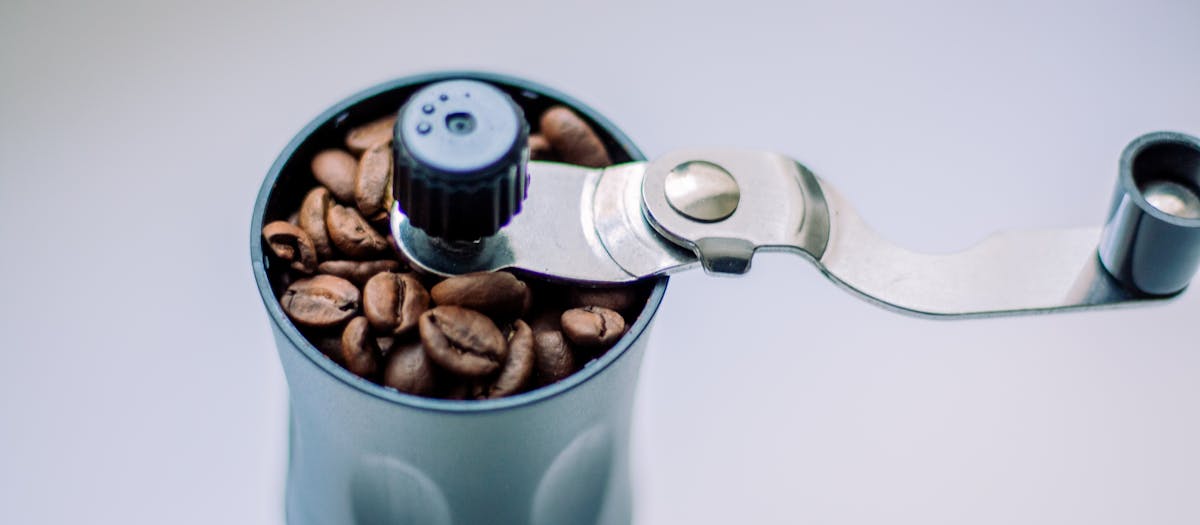
The grinder is the upgrade that changes the cup most, and a good hand grinder gives you the best grind quality per dollar in pour-over. This guide is tiered by price — from a strong sub-$100 starter to the obsessive end — and explains the five specs that separate them, so you can match a grinder to your budget and how much you brew, then points you to the picks once they are verified.
A note on how to read this. Almost any burr hand grinder reaches the medium grind pour-over needs; the differences are in how consistent the grind is, how finely you can adjust it, and how pleasant it is to use every morning. So the value here is the framework — what each spec changes — so you can shortlist by price tier, then compare. Read the framework first, then look at the picks.
How to choose a hand grinder
Five things decide whether a hand grinder suits you. Run any grinder through these — they are exactly the columns in the comparison below.
Burr type — conical is the practical norm
Hand grinders use burrs, not blades — two abrasive surfaces that crush beans to a consistent size, set by an adjustable gap. Most hand grinders use conical burrs (a cone inside a ring), which are efficient and easy to turn and suit pour-over well; flat burrs appear in some higher models for a tighter grind. Steel burrs are common and durable; some premium grinders use coated burrs for sharpness. The grinders hub explains the burr question in more depth.
Grind consistency — the spec that matters most
Consistency is how uniform the particle sizes come out, and it is the whole reason to buy a burr grinder. The more uniform the grounds, the more evenly water extracts them, and the cleaner the cup. This is where the price tiers separate: an entry grinder is good, a mid-tier grinder is very good, and the obsessive tier is excellent. Even the budget picks here are a vast improvement on pre-ground or a blade chopper.
Capacity — match it to your dose
Capacity is how much coffee the grinder holds per fill. A single pour-over dose is around 15 to 30 grams, and most hand grinders hold a single dose comfortably. If you regularly brew larger batches or for several people, a higher-capacity grinder saves refilling — but for one or two cups, capacity is rarely the deciding factor.
Adjustment — how precisely you can dial in
Adjustment is how you set the grind size, and how finely. Some grinders click between numbered steps (easy to record and return to), others are stepless (infinitely fine). Finer, numbered adjustment helps if you keep a brew log and chase repeatability; a simpler stepped dial is plenty for a casual drinker. More adjustment is a refinement, not a requirement.
Build — feel, durability and the daily crank
Build covers the materials, the bearings that keep the burrs aligned, and how smooth and stable the grinder feels in use. A well-built grinder turns smoothly, stays steady, and lasts years. The premium tier is noticeably nicer to use — a real consideration for something you operate by hand every morning — but a solid budget grinder still grinds well and lasts.
The hand grinders compared
A short list of widely available hand grinders, compared on the five specs above and grouped by price tier. Specs are verified against manufacturer data and current Amazon listings, and the brew guidance follows widely-accepted SCA-style ranges — no hands-on testing claims, just the specs and the notes that decide the fit.
| Best for | Burr type | Grind consistency | Capacity | Adjustment | Build |
|---|---|---|---|---|---|
| Best overall | 48mm stainless steel conical burr | Excellent — tight particle distribution for filter and pour-over | 35g | External magnetic dial — 90 clicks per rotation, 0.22mm per step | Full stainless steel; foldable handle; carrying case included |
| Best budget under $100 | 38mm S2C CNC stainless steel conical burrs | Very good — consistent from espresso to French press | 25g | Internal dial, ~36 usable steps | Aluminum alloy body, double-bearing axis; 280g |
| Best for pour-over precision | 47mm stainless steel conical burr (assembly consistency) | Outstanding — optimised for filter and pour-over extraction range | 30g | External numerical dial — 90 steps per rotation for micro-precise setting | Full stainless steel; foldable handle; carrying case included; ~320g |
| Best premium | High-alloy stainless steel conical burr (Nitro Blade) | Reference-grade — used by World Barista Champions; benchmark bimodal distribution | ~25g | External step dial — approx. 30 clicks per rotation; Red Clix upgrade available | German-engineered; borosilicate glass catch vessel; hand-polished internals |
| Best value step-up | 48mm stainless steel conical burr (updated burr set) | Excellent — among the best in the sub-$200 range for filter brewing | 35g | External magnetic dial — very fine step adjustment; highly repeatable | Full stainless steel; magnetic top cap; foldable handle; carrying bag included |
Our top picks
Best overall: 1Zpresso JX-Pro S

Best overall
1Zpresso JX-Pro S
1Zpresso
- Burr type: 48mm stainless steel conical burr
- Grind consistency: Excellent — tight particle distribution for filter and pour-over
- Capacity: 35g
- Adjustment: External magnetic dial — 90 clicks per rotation, 0.22mm per step
- Build: Full stainless steel; foldable handle; carrying case included
- Best for: Serious home brewers wanting café-quality grind without an electric grinder
The 1Zpresso JX-Pro S is the current iteration of one of the most widely recommended hand grinders in the enthusiast community. Its 48mm stainless steel conical burr delivers consistent particle distribution for pour-over and filter brewing, and the external magnetic dial makes dialling in a recipe fast and repeatable. At 35g capacity it handles a full V60 or Chemex dose in one grind.
Last checked 2026-05-21
Best budget under $100: TIMEMORE Chestnut C3 Manual Coffee Grinder, Stainless Steel Conical Burr

Best budget under $100
TIMEMORE Chestnut C3 Manual Coffee Grinder, Stainless Steel Conical Burr
TIMEMORE
- Burr type: 38mm S2C CNC stainless steel conical burrs
- Grind consistency: Very good — consistent from espresso to French press
- Capacity: 25g
- Adjustment: Internal dial, ~36 usable steps
- Build: Aluminum alloy body, double-bearing axis; 280g
- Best for: Budget-conscious daily grinder — pour-over and espresso under $80
The Timemore Chestnut C3 features upgraded S2C stainless steel conical burrs derived from the flagship Chestnut X, offering a smooth and consistent grind at a very accessible price point. Its compact 280g aluminum body and double-bearing axis make it a standout choice for anyone entering the hand grinder space under $100.
Last checked 2026-05-21
Best for pour-over precision: 1Zpresso K-Ultra Manual Coffee Grinder Iron Gray with Carrying Case, Assembly Consistency Grind Stainless Steel Conical Burr, Foldable Handle, Numerical External Adjustable Setting, All-Round Grinder

Best for pour-over precision
1Zpresso K-Ultra Manual Coffee Grinder Iron Gray with Carrying Case, Assembly Consistency Grind Stainless Steel Conical Burr, Foldable Handle, Numerical External Adjustable Setting, All-Round Grinder
1Zpresso
- Burr type: 47mm stainless steel conical burr (assembly consistency)
- Grind consistency: Outstanding — optimised for filter and pour-over extraction range
- Capacity: 30g
- Adjustment: External numerical dial — 90 steps per rotation for micro-precise setting
- Build: Full stainless steel; foldable handle; carrying case included; ~320g
- Best for: Enthusiasts dialling in pour-over recipes who need repeatable micro-adjustment
The 1Zpresso K-Ultra is built specifically for filter brewing — its 47mm conical burr produces uniform particle distribution across the coarser grind range that pour-over demands. The external numerical dial provides fine step adjustment, making it easy to record and repeat a setting across brewing sessions.
Last checked 2026-05-21
Best premium: Comandante C40 Hand Grinder MK4 - Black

Best premium
Comandante C40 Hand Grinder MK4 - Black
Comandante
- Burr type: High-alloy stainless steel conical burr (Nitro Blade)
- Grind consistency: Reference-grade — used by World Barista Champions; benchmark bimodal distribution
- Capacity: ~25g
- Adjustment: External step dial — approx. 30 clicks per rotation; Red Clix upgrade available
- Build: German-engineered; borosilicate glass catch vessel; hand-polished internals
- Best for: Coffee enthusiasts who want the finest hand grinder available at any price
The Comandante C40 MK4 is the reference standard in hand grinders — its German-engineered Nitro Blade burr set delivers a particle distribution that consistently impresses in blind comparisons with grinders costing several times as much. The borosilicate glass catch vessel and hand-polished internals reflect the premium build quality that has made it a favourite of World Barista Champions.
Last checked 2026-05-21
Best value step-up: J-Max Iron Gray

Best value step-up
J-Max Iron Gray
1Zpresso
- Burr type: 48mm stainless steel conical burr (updated burr set)
- Grind consistency: Excellent — among the best in the sub-$200 range for filter brewing
- Capacity: 35g
- Adjustment: External magnetic dial — very fine step adjustment; highly repeatable
- Build: Full stainless steel; magnetic top cap; foldable handle; carrying bag included
- Best for: Brewers stepping up from a budget grinder who want near-flagship performance under $200
The 1Zpresso J-Max bridges the gap between the $139 JX-Pro S and the $285 Comandante, delivering a 48mm updated burr set with near-flagship grind consistency at the $199 price point. The external magnetic dial and 35g capacity make it practical for daily use, and the magnetic top cap keeps grounds contained during grinding.
Last checked 2026-05-21
Who should buy what
First upgrade off pre-ground
A sub-$100 conical hand grinder is the place to start, and the jump in cup quality is larger than any brewer or kettle upgrade. Do not feel you need to spend more to begin — the entry tier grinds pour-over beautifully and lasts for years.
The dial-in enthusiast
If you keep notes and chase repeatability, a mid-tier grinder with fine, numbered adjustment lets you record a setting and return to it exactly. The extra grind uniformity also shows up as a cleaner, more even cup. This is where the money starts to be felt.
The gear lover
The premium tier — a Comandante or a high-end 1Zpresso — is more than pour-over strictly needs, but it is a genuine pleasure to use and built to last a lifetime. If the daily ritual matters to you as much as the cup, it is money well spent.
What to buy next
With the grind sorted, the next variable to control is water temperature, and that means a kettle. A gooseneck kettle gives you the controlled pour pour-over needs, and a variable-temperature model lets you hold the 195 to 205°F range that the SCA-style guidance recommends. If your grinder is settled, the next stop is the best gooseneck kettle guide. From there, a scale ties the whole recipe together.
Frequently asked questions
Is a hand grinder good enough for pour-over?
Yes, and a good one is excellent. A quality conical-burr hand grinder produces grounds as consistent as an electric grinder costing far more, which is what pour-over needs. The trade-off is a minute or so of cranking per cup. For one or two cups a day, a hand grinder is the best grind quality per dollar you can buy.
How much should I spend on a hand grinder?
You can get genuinely good pour-over grounds for under $100 from a grinder like the Timemore C2 or C3. Around $150 to $200 buys finer adjustment and more uniform grinds; $250 and up is the obsessive tier with beautiful build. Most pour-over drinkers are well served in the sub-$150 range — past that you pay for refinement, not necessity.
What is the difference between conical and flat burrs?
Conical burrs are a cone inside a ring, common in hand grinders — efficient and easy to turn, with a slightly broader range of particle sizes many find pleasant for pour-over. Flat burrs are two parallel rings that tend toward a tighter, more uniform grind, more common in high-end electric grinders. For hand grinders, conical is the practical norm.
How fine should a hand grinder go for pour-over?
You want a medium grind, roughly the texture of table salt. Any decent burr hand grinder covers the pour-over range easily — the differences between models are about consistency and how finely you can adjust, not whether they reach the right size. Adjust in small steps: grind coarser if the cup is bitter, finer if it is sour.
Hand grinder or electric grinder — which should I buy?
A hand grinder gives you the best grind quality per dollar, is quiet and portable, but takes a minute of cranking per cup. An electric grinder is faster and effortless, better for several cups a day or a busy household, but costs more for the same consistency. For one or two cups daily, a hand grinder is the value pick.
How long does a hand grinder take to grind a cup?
Roughly 30 to 60 seconds for a single pour-over dose of around 20 grams, depending on the grinder and the grind size — finer takes a little longer. Higher-end grinders with sharper burrs and larger capacity are faster. It is a small daily effort that many people find part of the ritual rather than a chore.
Can I use a hand grinder for espresso too?
Some can, but not all. Espresso needs a very fine, very consistent grind and fine adjustment near the low end, which only some hand grinders (often the pricier ones with stepless or fine-stepped adjustment) handle well. If you mainly brew pour-over, buy for that; if espresso matters, check the grinder is rated for it specifically before buying.