Gooseneck kettles
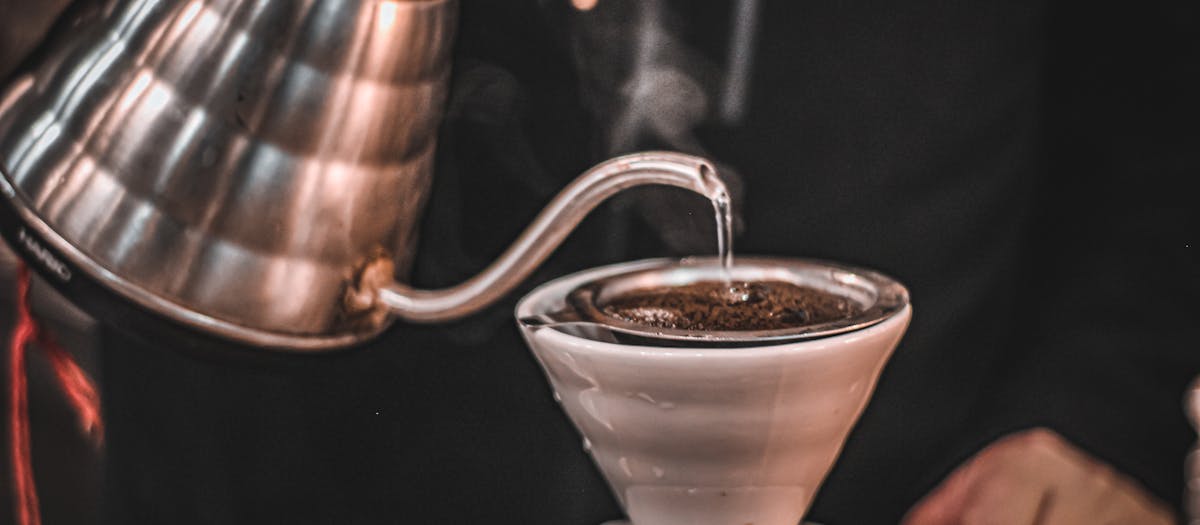
A pour-over kettle has two jobs: hit the right water temperature and let you pour a slow, precise stream. The gooseneck — the long, narrow, curved spout — is what makes the controlled pour possible. This silo explains temperature control and pour control, the electric-versus-stovetop choice, and where the popular kettles land, then points you to the full comparison.
The two jobs a kettle has to do
Temperature control — 195 to 205°F
Pour-over wants water between 195 and 205°F (about 90 to 96°C), the widely-accepted SCA-style range. Water straight off a rolling boil scorches the grounds and tastes bitter. A variable-temperature electric kettle lets you set and hold an exact temperature, which is the single feature that makes dialling in repeatable — lighter roasts near the top of the range, darker roasts a few degrees cooler. A stovetop or fixed kettle can still work if you let boiled water rest 30 to 45 seconds, but you are guessing.
Pour control — the gooseneck spout
The narrow gooseneck delivers a thin, steady stream you can place exactly where you want it, so you wet all the grounds evenly and control the flow rate. Even pouring is most of good pour-over technique. A wide kitchen-kettle spout dumps water and disturbs the bed unevenly, which is why a gooseneck is the upgrade most beginners feel immediately. Some goosenecks pour faster than others — a slower, more controllable pour generally suits pour-over better.
Electric versus stovetop
An electric gooseneck with variable temperature is the convenient, precise choice: set the temperature, walk away, and it holds. Many add a hold function and a built-in brew timer. A stovetop gooseneck is cheaper and simpler — you boil it on your hob and either pour off the boil after a short rest or check it with a thermometer. If you take pour-over seriously, the electric variable-temperature kettle is the upgrade that pays off daily; a stovetop gooseneck is the budget way to get the pour control without the temperature precision.
Where the popular kettles land
- Fellow Stagg EKG. The design-led benchmark — precise temperature control to the degree, a brew-stopwatch on some models, and a deliberately slow, controllable pour. The premium pick most buyers cluster on.
- Cosori and Bonavita. Strong-value electric goosenecks with variable temperature for noticeably less than the Stagg, with a slightly less refined pour.
- Brewista Artisan. A feature-rich electric option with fine temperature and a controllable pour, popular with tinkerers.
- Hario Buono. The classic stovetop gooseneck — pour control on a budget, no temperature readout, pair it with a thermometer or the off-boil rest.
Featured guides
The current published guides in this silo. More land each batch.
Landing next: Fellow Stagg EKG review, Bonavita kettle review, Cosori vs Fellow head-to-head, and the best stovetop gooseneck kettle.
Kettles for different drinkers
For the precise brewer
A variable-temperature electric gooseneck is for anyone who wants the same cup every morning. Set 200°F, let it hold, and remove temperature from the list of things that vary between brews.
For the budget start
A stovetop gooseneck gets you the controlled pour — the harder thing to fake — for the least money. Add a cheap thermometer and you have most of what a pricey kettle offers, minus the convenience.
For the multi-use kitchen
A larger-capacity electric gooseneck doubles for tea and small kitchen tasks while still pouring coffee well. If the kettle has to earn its counter space beyond coffee, lean toward capacity and a hold function.